What 54 Super Bowl Ads Revealed About Why Buyers Choose You
What 54 Super Bowl Ads Revealed About Why Buyers Choose You
Written by

Jaymi Onorato
Hey, it’s Jaymi.
Most of us watched 54 Super Bowl ads this week. Most of them didn't land.
The data checks out: ads relying on spectacle and celebrity ranked lowest in USA Today's Ad Meter.
But the most effective Super Bowl marketing didn't happen during the game at all. It happened around it.
🌱 Growing
The brands that participated AND broadcasted
Some of the most effective Super Bowl campaigns didn’t actually happen during the game.
They happened around it.
Duolingo’s “Bad Bunny 101” campaign is a perfect example.
Instead of trying to explain themselves, they leaned into context:
Created Spanish lessons tied to Bad Bunny lyrics
Built around the first-ever all-Spanish Super Bowl halftime show
Extended the moment across social, Spotify, and even a literal NYC “Spanish Train”
The outcome:
35% increase in Spanish learners immediately post-Super Bowl
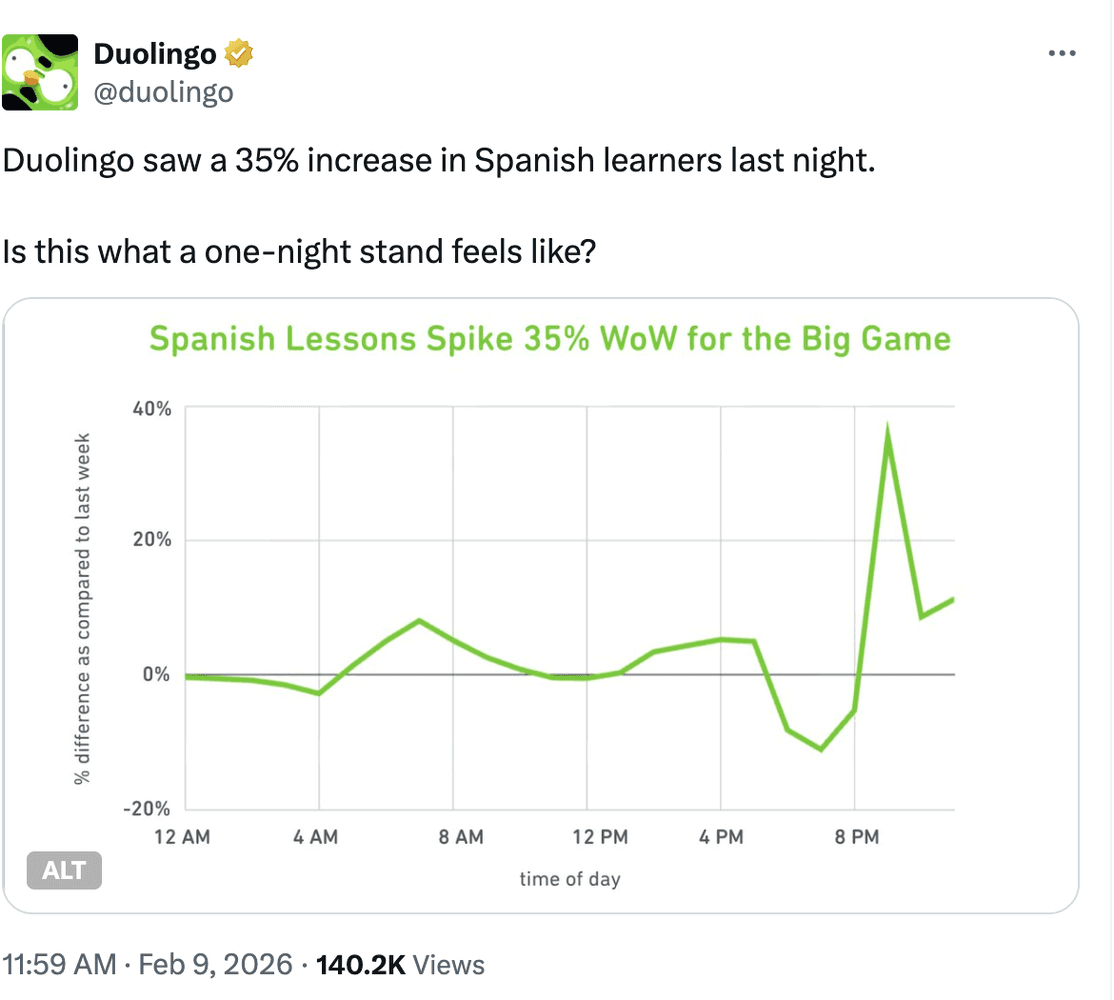
They didn’t explain. They participated.
Relevance now isn’t just about buying attention. It’s about earning continuation.
Why big moments aren’t converting into lasting memories
I feel like we say this every year, but marketing has truly never been louder.
And yet, so much of it still evaporates.
The majority of Super Bowl ads this year had a familiar formula of pulling celebrities front and center to get attention.
The issue wasn’t about grabbing attention, I mean most of us were there.
The issue was more about closing the loop.
Many of us were asking:
Who was this ad for?
What was I supposed to feel?
Would I even recognize this brand without a celebrity?
There was also a noticeable shift in category dominance:
Gambling
Crypto
AI / tech
Weight loss
Surveillance
Very little of it felt tangible or buyable for the average person at the moment. Instead of aspiration or familiarity, much of it felt abstract —and in some cases, dystopian.
Attention was captured. Conviction wasn’t.
What the sentiment data confirms
I looked at USA Today’s Ad Meter to see which ads people actually liked.
Top performers:
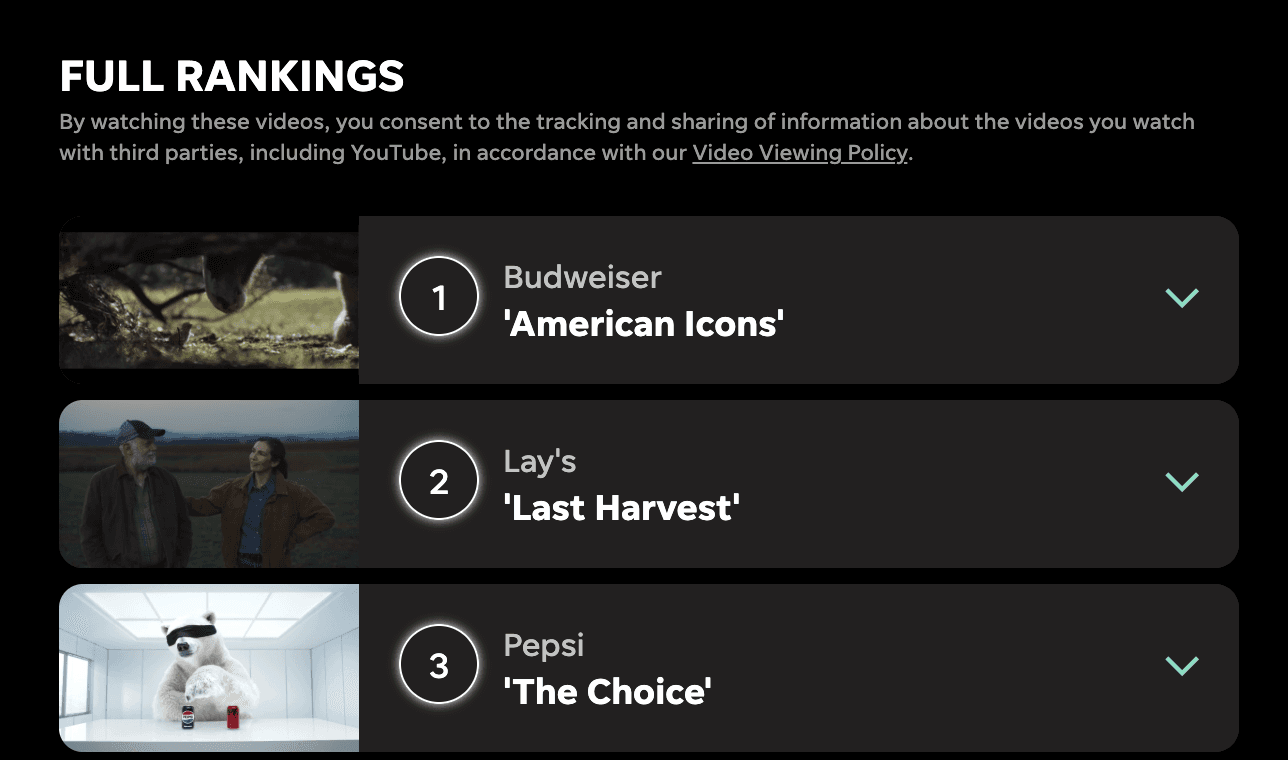
Super Bowl 2026 Top-Ranked Ads (USA Today)
#1 Budweiser "American Icons" (4/5, 9.2M views) - familiar, human, simple.
#2 Lay's "Last Harvest" (3.8/5, 516K views) - father-daughter storyline.
#3 Pepsi "The Choice" (3.5/5, 5.4M views) - nostalgia-driven.
Bottom performers:
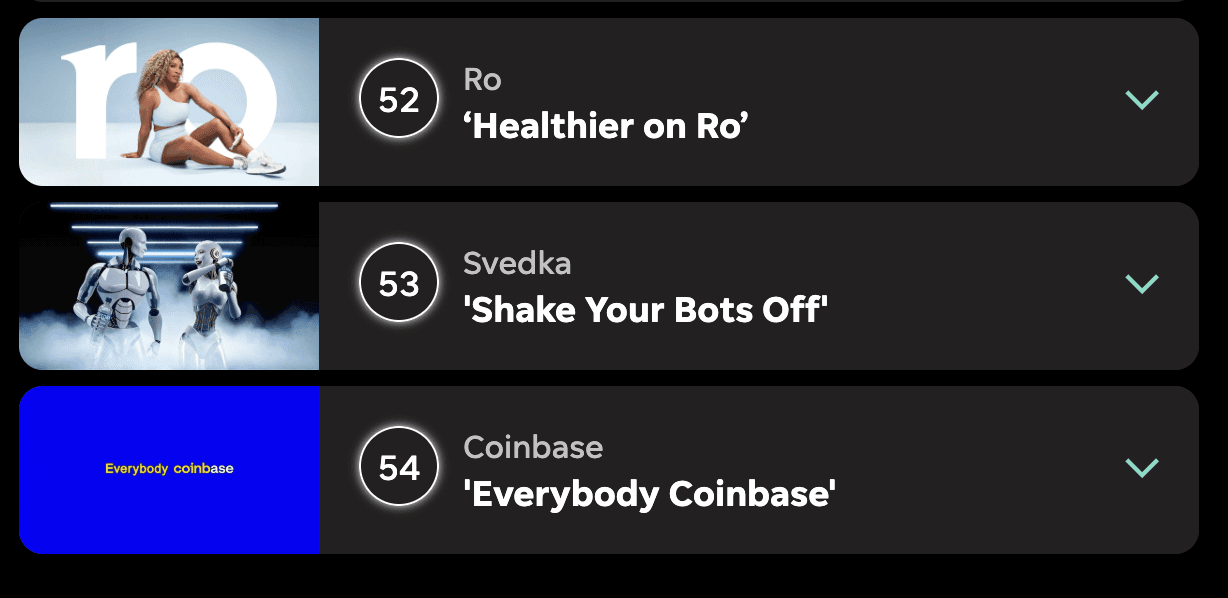
Super Bowl 2026 Lowest-Ranked Ads (USA Today)
#52 Ro "Healthier on Ro" (2.3/5, 326K views)- weight-loss meds that felt intrusive, not inspiring.
#53 Svedka "Shake Your Boots Off’ (2.18/5, 214K views) - robots promoting alcohol.
#54 Coinbase "Everybody Coinbase" (2.06/5, 98K views) - Crypto as a singalong. I still don't know what we were being asked to feel.
The top three ads had zero celebrity dependency and STILL won people over.
The bottom three leaned into spectacle and shock.
The takeaway isn't that celebrities "don't work anymore."
It's that people are exhausted by abstraction.
When something feels over-engineered, dystopian, or too detached from everyday life, it loses its emotional grip—no matter how expensive or clever it was.
And once you lose emotional grip, recall leaves with it.
Given the current climate in the US, people want connection and familiarity—not flashy and out-of-touch.
This applies to all marketing, not just ads.
🏃🏻 Going
What this can teach us about B2B decision-making
People don’t stay with products because they’re “better.”
They stay because leaving feels disruptive to their everyday flow.
That’s the real power behind switching costs —it's not about features. It's about context:
Slack keeps teams because conversations live there
Salesforce keeps orgs because history lives there
Figma keeps companies because collaboration lives there
MarTech analyst Scott Brinker said it well in his newsletter recently: features and interfaces are becoming commodities. What lasts is context—domain knowledge, workflows, and decision scaffolding.
This is the same thing the Super Bowl data showed us.
The ads that worked weren't selling something new. They were tapping into something familiar: family, nostalgia, shared moments.
They reduced friction instead of creating it.
B2B buyers operate the same way. They're not just evaluating features or ROI. They're evaluating risk, friction, and comfort.
If your messaging doesn't reduce perceived disruption, it won't move anyone—no matter how impressive it sounds.
Language as a decision lever
I've been noticing how the smallest language shifts change whether someone hesitates or decides.
Cost → Investment
Pilot → Phase One
Deal → Opportunity
Contract → Agreement
Problem → Challenge
You're not changing the deliverable. You're changing the emotional weight of committing to it.
This has already been helping with proposals.
When I frame marketing projects as "Phase One" instead of "pilot," or position strategy as an "investment in clarity" rather than a "cost," people move faster.
The scope doesn't change, but the perceived risk does.
I'm applying the same principle as I rebuild my site.
Instead of leading with "I do websites, strategy, and content," I'm testing: "I help B2B founders turn complex products into clear, repeatable stories."
Same work. Different frame.
The first version makes you evaluate my capabilities. The second version makes you recognize your problem—and whether I can reduce the friction of solving it.
It's the same principle that made Budweiser's father-daughter story land harder than Coinbase's celebrity karaoke.
One felt familiar. The other felt like it was asking you to decode something.
✖️ Gone
Participating in moments just to be visible
Proposals and holidays have something in common: most people participate out of obligation, not strategy.
With Valentine's Day this weekend, I can already hear B2B marketers asking: "Should we do something with this?"
Unless you have something genuine to say, forcing relevance just makes you forgettable.
Valentine's Day works in B2B when it reflects shared professional reality, not romance:
Salesforce celebrating Trailblazers (recognizing community members who help others succeed)
Break-up humor (playing on ghosted leads - check out HubSpot's breakup email templates that help close the loop)
Client appreciation moments (thanking partners for building with you through handwritten thank you notes, videos showing appreciation, etc.)
What I'm letting go of: treating cultural moments as obligations instead of opportunities.
If you don't have something meaningful to add, you don't need to participate.
🗽 Advice from a New Yorker
Each week, I ask someone in the city one question:
What’s one thing you’ve learned about building something that most people overlook?
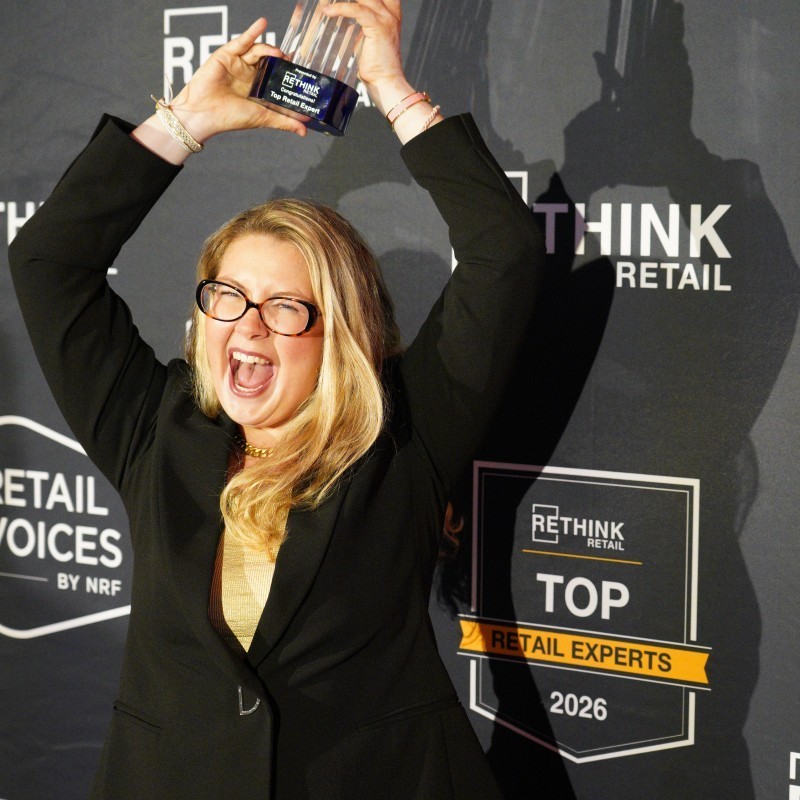
This week’s answer came from Lena, Head of Marketing at eTail, a large event widely known in the retail space.
Building community is more important than ever. Why? Because retaining a loyal customer is far more cost-effective than constantly chasing new ones. In a cost-conscious, margin-tight economy, brands that win aren’t always the flashiest or loudest - they’re the ones with a die-hard loyal customer base.
Here’s a stat that makes this undeniable: 84% of consumers check a brand’s social media before making a purchase. That means your community is your credibility…
Especially when the first place customers are going to check you out is on community-based platforms filled with trusted influencers and friendly voices.
Community is where trust is built, doubts are resolved, and vibes are assessed. And if your community feels real, engaged, and valued, you’re not just selling a product - you’re building an empire.
In other words: community trust is the new conversion lever.
Brands that invest in it don’t just survive slower growth cycles, they compound through them.
What I like about Lena's perspective is that it's the same principle the Super Bowl data revealed:
What feels familiar sticks. What feels flashy fades.
The ads people remembered weren't the cleverest or the most expensive. They were the ones that felt human and recognizable, like something you'd already trust.
That's why Duolingo didn't need a $8M ad slot. They already had community and context. They just activated it.
That's why Budweiser's father-daughter story beat celebrity karaoke. One tapped into something people already felt. The other asked them to work.
In events, B2B positioning, proposals, or even holiday marketing—the closer you get to real decision-making, the less room there is for empty spectacle.
Closing thought
Budweiser didn't win the Super Bowl with celebrities. They won with a father, a daughter, and a field.
Duolingo didn't win with an $8M ad slot. They won by activating the community they'd already built.
Both understood the same thing Lena's talking about: what feels familiar sticks. What feels flashy fades.
The question isn't whether your marketing is clever or whether you're showing up everywhere.
It's whether people would choose you even if you weren't there to explain why.
Until next time,
Jaymi 🌆
Hey, it’s Jaymi.
Most of us watched 54 Super Bowl ads this week. Most of them didn't land.
The data checks out: ads relying on spectacle and celebrity ranked lowest in USA Today's Ad Meter.
But the most effective Super Bowl marketing didn't happen during the game at all. It happened around it.
🌱 Growing
The brands that participated AND broadcasted
Some of the most effective Super Bowl campaigns didn’t actually happen during the game.
They happened around it.
Duolingo’s “Bad Bunny 101” campaign is a perfect example.
Instead of trying to explain themselves, they leaned into context:
Created Spanish lessons tied to Bad Bunny lyrics
Built around the first-ever all-Spanish Super Bowl halftime show
Extended the moment across social, Spotify, and even a literal NYC “Spanish Train”
The outcome:
35% increase in Spanish learners immediately post-Super Bowl
They didn’t explain. They participated.
Relevance now isn’t just about buying attention. It’s about earning continuation.
Why big moments aren’t converting into lasting memories
I feel like we say this every year, but marketing has truly never been louder.
And yet, so much of it still evaporates.
The majority of Super Bowl ads this year had a familiar formula of pulling celebrities front and center to get attention.
The issue wasn’t about grabbing attention, I mean most of us were there.
The issue was more about closing the loop.
Many of us were asking:
Who was this ad for?
What was I supposed to feel?
Would I even recognize this brand without a celebrity?
There was also a noticeable shift in category dominance:
Gambling
Crypto
AI / tech
Weight loss
Surveillance
Very little of it felt tangible or buyable for the average person at the moment. Instead of aspiration or familiarity, much of it felt abstract —and in some cases, dystopian.
Attention was captured. Conviction wasn’t.
What the sentiment data confirms
I looked at USA Today’s Ad Meter to see which ads people actually liked.
Top performers:
Super Bowl 2026 Top-Ranked Ads (USA Today)
#1 Budweiser "American Icons" (4/5, 9.2M views) - familiar, human, simple.
#2 Lay's "Last Harvest" (3.8/5, 516K views) - father-daughter storyline.
#3 Pepsi "The Choice" (3.5/5, 5.4M views) - nostalgia-driven.
Bottom performers:
Super Bowl 2026 Lowest-Ranked Ads (USA Today)
#52 Ro "Healthier on Ro" (2.3/5, 326K views)- weight-loss meds that felt intrusive, not inspiring.
#53 Svedka "Shake Your Boots Off’ (2.18/5, 214K views) - robots promoting alcohol.
#54 Coinbase "Everybody Coinbase" (2.06/5, 98K views) - Crypto as a singalong. I still don't know what we were being asked to feel.
The top three ads had zero celebrity dependency and STILL won people over.
The bottom three leaned into spectacle and shock.
The takeaway isn't that celebrities "don't work anymore."
It's that people are exhausted by abstraction.
When something feels over-engineered, dystopian, or too detached from everyday life, it loses its emotional grip—no matter how expensive or clever it was.
And once you lose emotional grip, recall leaves with it.
Given the current climate in the US, people want connection and familiarity—not flashy and out-of-touch.
This applies to all marketing, not just ads.
🏃🏻 Going
What this can teach us about B2B decision-making
People don’t stay with products because they’re “better.”
They stay because leaving feels disruptive to their everyday flow.
That’s the real power behind switching costs —it's not about features. It's about context:
Slack keeps teams because conversations live there
Salesforce keeps orgs because history lives there
Figma keeps companies because collaboration lives there
MarTech analyst Scott Brinker said it well in his newsletter recently: features and interfaces are becoming commodities. What lasts is context—domain knowledge, workflows, and decision scaffolding.
This is the same thing the Super Bowl data showed us.
The ads that worked weren't selling something new. They were tapping into something familiar: family, nostalgia, shared moments.
They reduced friction instead of creating it.
B2B buyers operate the same way. They're not just evaluating features or ROI. They're evaluating risk, friction, and comfort.
If your messaging doesn't reduce perceived disruption, it won't move anyone—no matter how impressive it sounds.
Language as a decision lever
I've been noticing how the smallest language shifts change whether someone hesitates or decides.
Cost → Investment
Pilot → Phase One
Deal → Opportunity
Contract → Agreement
Problem → Challenge
You're not changing the deliverable. You're changing the emotional weight of committing to it.
This has already been helping with proposals.
When I frame marketing projects as "Phase One" instead of "pilot," or position strategy as an "investment in clarity" rather than a "cost," people move faster.
The scope doesn't change, but the perceived risk does.
I'm applying the same principle as I rebuild my site.
Instead of leading with "I do websites, strategy, and content," I'm testing: "I help B2B founders turn complex products into clear, repeatable stories."
Same work. Different frame.
The first version makes you evaluate my capabilities. The second version makes you recognize your problem—and whether I can reduce the friction of solving it.
It's the same principle that made Budweiser's father-daughter story land harder than Coinbase's celebrity karaoke.
One felt familiar. The other felt like it was asking you to decode something.
✖️ Gone
Participating in moments just to be visible
Proposals and holidays have something in common: most people participate out of obligation, not strategy.
With Valentine's Day this weekend, I can already hear B2B marketers asking: "Should we do something with this?"
Unless you have something genuine to say, forcing relevance just makes you forgettable.
Valentine's Day works in B2B when it reflects shared professional reality, not romance:
Salesforce celebrating Trailblazers (recognizing community members who help others succeed)
Break-up humor (playing on ghosted leads - check out HubSpot's breakup email templates that help close the loop)
Client appreciation moments (thanking partners for building with you through handwritten thank you notes, videos showing appreciation, etc.)
What I'm letting go of: treating cultural moments as obligations instead of opportunities.
If you don't have something meaningful to add, you don't need to participate.
🗽 Advice from a New Yorker
Each week, I ask someone in the city one question:
What’s one thing you’ve learned about building something that most people overlook?
This week’s answer came from Lena, Head of Marketing at eTail, a large event widely known in the retail space.
Building community is more important than ever. Why? Because retaining a loyal customer is far more cost-effective than constantly chasing new ones. In a cost-conscious, margin-tight economy, brands that win aren’t always the flashiest or loudest - they’re the ones with a die-hard loyal customer base.
Here’s a stat that makes this undeniable: 84% of consumers check a brand’s social media before making a purchase. That means your community is your credibility…
Especially when the first place customers are going to check you out is on community-based platforms filled with trusted influencers and friendly voices.
Community is where trust is built, doubts are resolved, and vibes are assessed. And if your community feels real, engaged, and valued, you’re not just selling a product - you’re building an empire.
In other words: community trust is the new conversion lever.
Brands that invest in it don’t just survive slower growth cycles, they compound through them.
What I like about Lena's perspective is that it's the same principle the Super Bowl data revealed:
What feels familiar sticks. What feels flashy fades.
The ads people remembered weren't the cleverest or the most expensive. They were the ones that felt human and recognizable, like something you'd already trust.
That's why Duolingo didn't need a $8M ad slot. They already had community and context. They just activated it.
That's why Budweiser's father-daughter story beat celebrity karaoke. One tapped into something people already felt. The other asked them to work.
In events, B2B positioning, proposals, or even holiday marketing—the closer you get to real decision-making, the less room there is for empty spectacle.
Closing thought
Budweiser didn't win the Super Bowl with celebrities. They won with a father, a daughter, and a field.
Duolingo didn't win with an $8M ad slot. They won by activating the community they'd already built.
Both understood the same thing Lena's talking about: what feels familiar sticks. What feels flashy fades.
The question isn't whether your marketing is clever or whether you're showing up everywhere.
It's whether people would choose you even if you weren't there to explain why.
Until next time,
Jaymi 🌆