Speed vs. Strategy: The Career Lesson Hidden in a Failed Outbound Test
Speed vs. Strategy: The Career Lesson Hidden in a Failed Outbound Test
Written by

Jaymi Onorato
Hey, it’s Jaymi.
I spent $200 on Apollo Premium recently and got my email silently flagged by Outlook. No warning, no spam alert...just radio silence.
I caught it only when my normal emails stopped delivering.
More on that issue below, but first—the numbers from last week's newsletter launch.
276 subscribers (LinkedIn auto-notified my network, so this is inflated)
1,770 impressions (how many times the post appeared in feeds)
43 article views (actual readers; this is what I'm paying attention to)
63 engagements (comments, profile visits, link clicks)
Overall: Impressions show reach. Views show consumption. Engagements show how much this is resonating.
Right now, I'm optimizing for views + meaningful comments (not vanity metrics). The gap between subscribers (276) and views (43) is exactly what "building in public" looks like early on.
This week, I'm digging into the generalist vs. specialist debate and sharing what 50+ Reddit responses taught me about positioning yourself in 2026.
🌱 Growing
Why this question is burning in my mind.
Early in my marketing career, I was told to start broad then specialize.
Later, a CMO told me the opposite: generalists are always more valuable.
Both felt right, but incomplete.
Recently, I asked Reddit which path is more effective for careers in 2026.
I got 50+ responses and noticed this pattern (quick reminder from last issue—always look for patterns, not hot takes.):
The most valuable marketers don't choose one path, they move between them intentionally.
4 insights kept showing up
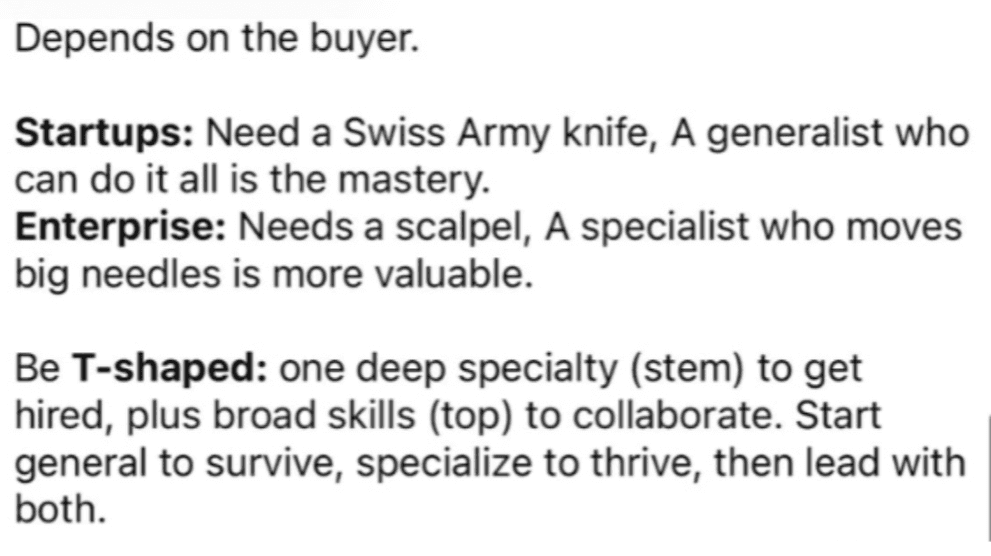
1. Generalists survive chaos. Specialists get paid when it clears.
Early-stage startups need Swiss Army knives, not scalpels. When no one knows the "right" answer, generalists connect dots, avoid landmines, and keep momentum.
But once the chaos settles, depth becomes leverage. Clear goals = clear ownership = higher pay.
One Redditor put it perfectly: "Generalists keep startups alive. Specialists get paid when the chaos phase is over."
2. Leadership favors generalists.
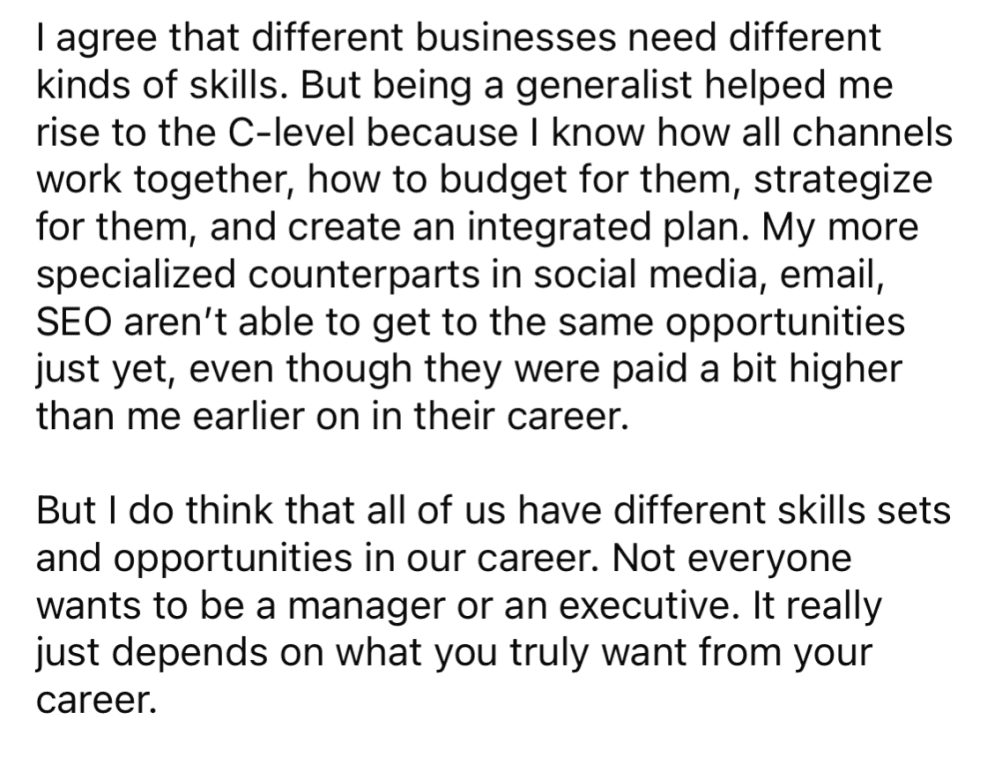
C-level marketers overwhelmingly started broad. Why? Leadership isn't about executing one channel—it's about:
Integrated strategy
Budget tradeoffs
Sequencing bets
Seeing second-order effects
Specialists may earn more earlier, but generalists end up with scope, control, and optionality.
3. AI is flattening "average" on both sides.
Average specialists get replaced. Shallow generalists get ignored.
The consensus wasn't "pick a side."
It was: Learn fast. Think in systems. Recombine skills into unique outcomes.
Top performers either:
Become exceptionally deep (top 1%), OR
Connect multiple skills into something uniquely valuable
The sequence most people follow: start general to survive > specialize to earn > recombine to lead.
The mistake isn't being broad or narrow. It's staying static while the market moves.
4. The T-shaped marketer is the meta.
One deep specialty (the stem) to get hired. Broad skills (the top) to collaborate and lead.
This isn't new advice, but it's becoming the only sustainable path.
🏃🏻 Going
What I’m actively testing this week
Hypothesis: Static carousels outperform video for complex ideas on LinkedIn.
I've been tracking this across my own content and client work (like Prefixe Design, an interior design small biz I consult for).
My theory: When the idea is nuanced, format matters more than novelty. Context-heavy content requires you to pause—video keeps moving.
The test: This week, I'm posting 2 less-polished carousels focused on clarity over branding. I'll track:
CTR to website (not just likes)
Shares (the real signal of value)
Profile visits from post engagement
Early signal: Last week's carousel got more saves than our Reel 👀, even though the Reel had higher raw engagement. Saves = "I'll reference this later" — which is exactly what I want.
A note on "AI hacks" (spoiler: they don't exist)
You've probably seen the KitKat campaign claiming ChatGPT gives better answers if you tell it to "take a break" first.
Clever marketing. Not the best advice.
I tried it. It doesn't work.
Better output doesn't come from magical prompts. It comes from:
Clear intent (What do I actually need?)
Clear constraints (What should this NOT include?)
Reacting to what's not working (Treating the first response as a draft)
This is the same trap people fall into with the generalist vs. specialist debate—looking for the shortcut instead of doing the work.
My ChatGPT rules that actually work:
Assume zero memory (even on paid plans). Restate the goal every time.
Tell it how to think, not just what to do. ("Challenge this idea. Point out gaps I'm not seeing.")
Treat the first response as a rough draft. Add constraints, iterate.
Progress comes from engagement, not perfection.
(Also, if you haven't seen the Fanatic Sportsbook ad with Kendall Jenner yet, please go watch it. It's a masterclass in not taking yourself too seriously while still landing the message.)
✖️ Gone
Trying tools before setting strategy
Here's the Apollo disaster I mentioned at the top.
I tested Apollo Premium to run outbound to cold leads. Before I screwed it up (lol), here's what actually worked:
What I did right:
Tracked intent keywords + layered a website pixel (shoutout to my Intentsify days for teaching me this)
Focused on companies actively searching for keywords relevant to my business (like "corporate website design") AND already visiting my site
Personalized every email with a dynamic field showing 2-3 quick optimization ideas (free value upfront)
The results: 300 emails sent → 2.7% CTR.
Not groundbreaking, but solid signal that the targeting + personalization worked.
But thennnnn I got greedy.
I increased send volume beyond Apollo's recommendations while using Outlook.
My email got silently flagged. No spam alert. Just nothing delivered.
I only caught it when my normal Outlook emails stopped going through.
I had to pause outbound entirely, switch to Google Workspace, and rebuild the whole strategy.
The lesson: Wanting data faster doesn't mean you should speed up execution.
In outbound, speed without strategy costs more time than patience ever will.
If you're running outbound, learn from my mistake:
Follow platform limits religiously (!!)
Be extra cautious with Outlook (Gmail is more forgiving, but still not immune)
Ramp slowly...even if you're impatient
🗽 Advice from a New Yorker
Each week, I ask someone in NYC one question:
What’s one thing you’ve learned about building something?
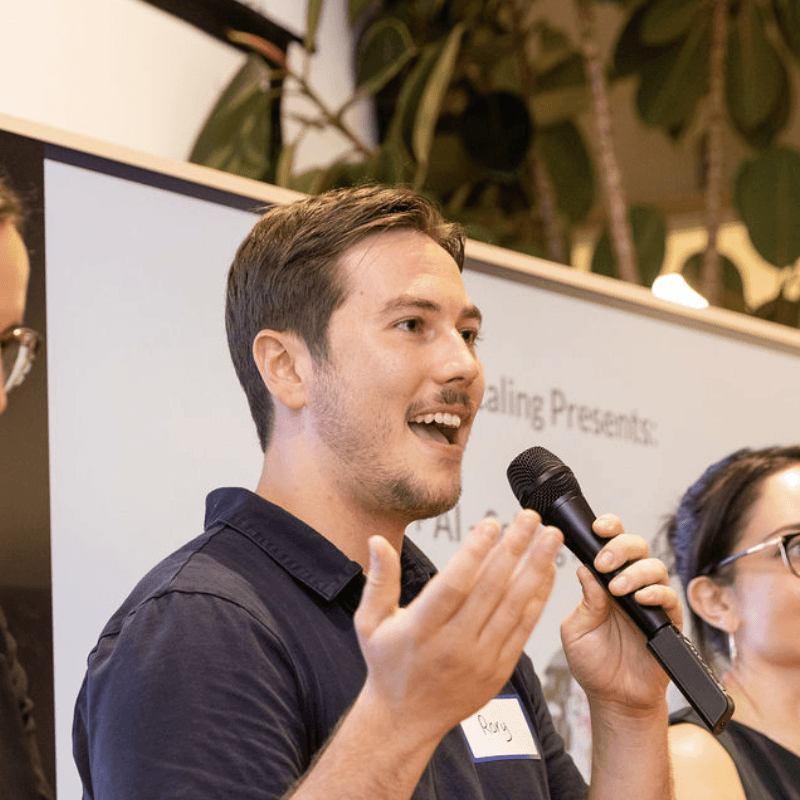
This week: Rory, founding BDR and second Account Executive at Attention.
The best thing I’ve built in sales isn’t a deal—it’s a referral pipeline. Early on I focused on closing; now I focus on whether someone would introduce me to a peer even if they don’t buy. That shift forced me to get creative with how I add value before the ask, but also ruthlessly data-driven about what actually earns trust versus what just feels productive. The compounds are slow but the math eventually gets ridiculous.
Until next time!
- Jaymi 🌆
Hey, it’s Jaymi.
I spent $200 on Apollo Premium recently and got my email silently flagged by Outlook. No warning, no spam alert...just radio silence.
I caught it only when my normal emails stopped delivering.
More on that issue below, but first—the numbers from last week's newsletter launch.
276 subscribers (LinkedIn auto-notified my network, so this is inflated)
1,770 impressions (how many times the post appeared in feeds)
43 article views (actual readers; this is what I'm paying attention to)
63 engagements (comments, profile visits, link clicks)
Overall: Impressions show reach. Views show consumption. Engagements show how much this is resonating.
Right now, I'm optimizing for views + meaningful comments (not vanity metrics). The gap between subscribers (276) and views (43) is exactly what "building in public" looks like early on.
This week, I'm digging into the generalist vs. specialist debate and sharing what 50+ Reddit responses taught me about positioning yourself in 2026.
🌱 Growing
Why this question is burning in my mind.
Early in my marketing career, I was told to start broad then specialize.
Later, a CMO told me the opposite: generalists are always more valuable.
Both felt right, but incomplete.
Recently, I asked Reddit which path is more effective for careers in 2026.
I got 50+ responses and noticed this pattern (quick reminder from last issue—always look for patterns, not hot takes.):
The most valuable marketers don't choose one path, they move between them intentionally.
4 insights kept showing up
1. Generalists survive chaos. Specialists get paid when it clears.
Early-stage startups need Swiss Army knives, not scalpels. When no one knows the "right" answer, generalists connect dots, avoid landmines, and keep momentum.
But once the chaos settles, depth becomes leverage. Clear goals = clear ownership = higher pay.
One Redditor put it perfectly: "Generalists keep startups alive. Specialists get paid when the chaos phase is over."
2. Leadership favors generalists.
C-level marketers overwhelmingly started broad. Why? Leadership isn't about executing one channel—it's about:
Integrated strategy
Budget tradeoffs
Sequencing bets
Seeing second-order effects
Specialists may earn more earlier, but generalists end up with scope, control, and optionality.
3. AI is flattening "average" on both sides.
Average specialists get replaced. Shallow generalists get ignored.
The consensus wasn't "pick a side."
It was: Learn fast. Think in systems. Recombine skills into unique outcomes.
Top performers either:
Become exceptionally deep (top 1%), OR
Connect multiple skills into something uniquely valuable
The sequence most people follow: start general to survive > specialize to earn > recombine to lead.
The mistake isn't being broad or narrow. It's staying static while the market moves.
4. The T-shaped marketer is the meta.
One deep specialty (the stem) to get hired. Broad skills (the top) to collaborate and lead.
This isn't new advice, but it's becoming the only sustainable path.
🏃🏻 Going
What I’m actively testing this week
Hypothesis: Static carousels outperform video for complex ideas on LinkedIn.
I've been tracking this across my own content and client work (like Prefixe Design, an interior design small biz I consult for).
My theory: When the idea is nuanced, format matters more than novelty. Context-heavy content requires you to pause—video keeps moving.
The test: This week, I'm posting 2 less-polished carousels focused on clarity over branding. I'll track:
CTR to website (not just likes)
Shares (the real signal of value)
Profile visits from post engagement
Early signal: Last week's carousel got more saves than our Reel 👀, even though the Reel had higher raw engagement. Saves = "I'll reference this later" — which is exactly what I want.
A note on "AI hacks" (spoiler: they don't exist)
You've probably seen the KitKat campaign claiming ChatGPT gives better answers if you tell it to "take a break" first.
Clever marketing. Not the best advice.
I tried it. It doesn't work.
Better output doesn't come from magical prompts. It comes from:
Clear intent (What do I actually need?)
Clear constraints (What should this NOT include?)
Reacting to what's not working (Treating the first response as a draft)
This is the same trap people fall into with the generalist vs. specialist debate—looking for the shortcut instead of doing the work.
My ChatGPT rules that actually work:
Assume zero memory (even on paid plans). Restate the goal every time.
Tell it how to think, not just what to do. ("Challenge this idea. Point out gaps I'm not seeing.")
Treat the first response as a rough draft. Add constraints, iterate.
Progress comes from engagement, not perfection.
(Also, if you haven't seen the Fanatic Sportsbook ad with Kendall Jenner yet, please go watch it. It's a masterclass in not taking yourself too seriously while still landing the message.)
✖️ Gone
Trying tools before setting strategy
Here's the Apollo disaster I mentioned at the top.
I tested Apollo Premium to run outbound to cold leads. Before I screwed it up (lol), here's what actually worked:
What I did right:
Tracked intent keywords + layered a website pixel (shoutout to my Intentsify days for teaching me this)
Focused on companies actively searching for keywords relevant to my business (like "corporate website design") AND already visiting my site
Personalized every email with a dynamic field showing 2-3 quick optimization ideas (free value upfront)
The results: 300 emails sent → 2.7% CTR.
Not groundbreaking, but solid signal that the targeting + personalization worked.
But thennnnn I got greedy.
I increased send volume beyond Apollo's recommendations while using Outlook.
My email got silently flagged. No spam alert. Just nothing delivered.
I only caught it when my normal Outlook emails stopped going through.
I had to pause outbound entirely, switch to Google Workspace, and rebuild the whole strategy.
The lesson: Wanting data faster doesn't mean you should speed up execution.
In outbound, speed without strategy costs more time than patience ever will.
If you're running outbound, learn from my mistake:
Follow platform limits religiously (!!)
Be extra cautious with Outlook (Gmail is more forgiving, but still not immune)
Ramp slowly...even if you're impatient
🗽 Advice from a New Yorker
Each week, I ask someone in NYC one question:
What’s one thing you’ve learned about building something?
This week: Rory, founding BDR and second Account Executive at Attention.
The best thing I’ve built in sales isn’t a deal—it’s a referral pipeline. Early on I focused on closing; now I focus on whether someone would introduce me to a peer even if they don’t buy. That shift forced me to get creative with how I add value before the ask, but also ruthlessly data-driven about what actually earns trust versus what just feels productive. The compounds are slow but the math eventually gets ridiculous.
Until next time!
- Jaymi 🌆