2025
Client
Zonda
Industry
Real Estate Tech
Service(s)
Website Overhaul & Product Messaging
Goal
Convert Qualified Inbound Traffic into Pipeline

Project Overview
Zonda is the leading housing intelligence provider in North America, serving homebuilders, land developers, mortgage lenders, institutional investors, and building product manufacturers. Their offerings span 20+ solutions across enterprise data, subscription research, advisory services, digital software, and listing sites - a comprehensive product ecosystem.
The project involved a full-scale website overhaul and rebuild of product messaging across every business line. That meant auditing and restructuring the entire site architecture, rewriting product messaging from scratch, building audience-specific pages for each market segment, rebuilding the conversion and lead routing infrastructure, and creating a campaign-ready demand generation layer to support paid media at scale.
The goal was a website that can do what a great sales rep does: qualify the right buyer, communicate the right value, and move them toward action.
Challenge
Buyer Confusion
Narrative Fragmentation
Conversion Friction
Discoverability Gaps
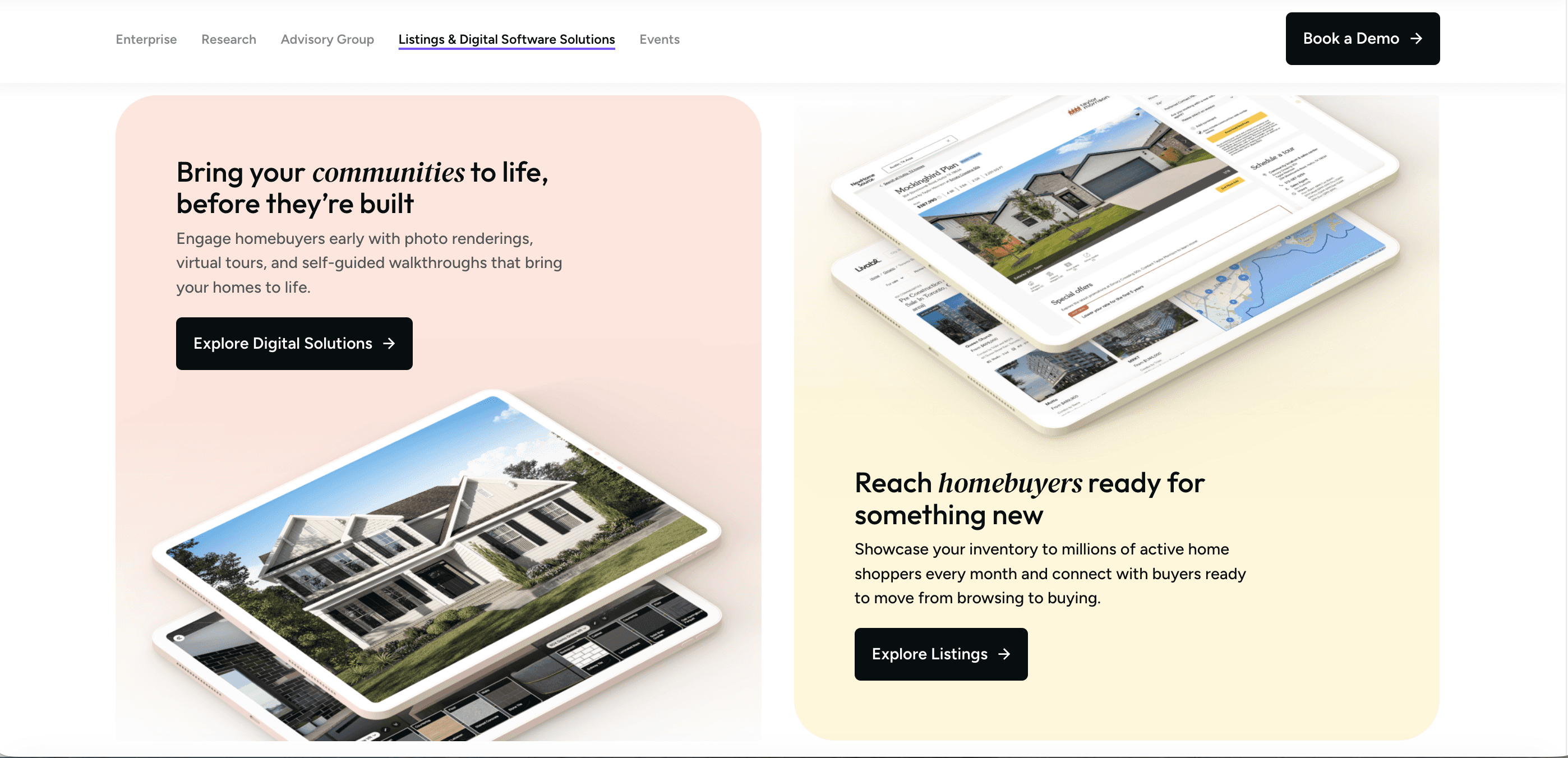
With 20+ solutions across multiple categories and audiences, clarity was the core focus. Products were inconsistently named, newer offerings were missing, and there was no logical hierarchy to help buyers understand what was relevant to them.
Without audience segmentation, messaging was generic, which meant inbound was low quality. The site was attracting out-of-market agents, freelancers, and users with no real buying intent. The right buyers were landing and leaving without converting.
The conversion infrastructure also needed to be addressed. Forms weren't aligned to products, leads weren't routed to the right reps, and there was no segmentation logic to fix it.
Approach
Buyer-First Messaging
Audience Segmentation
Effective Conversion Paths
Product Messaging Rebuild
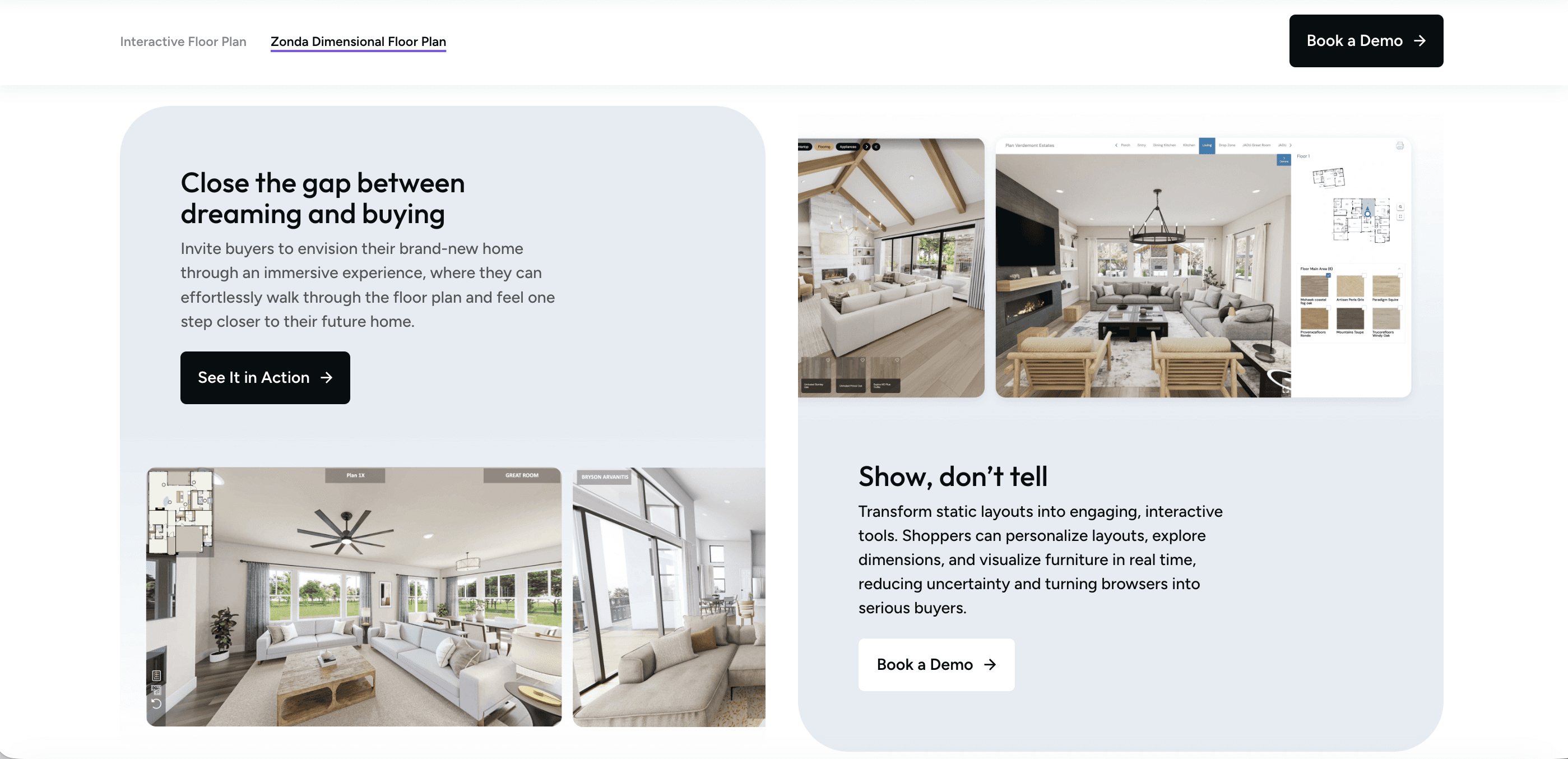
Every product across the ecosystem was rewritten from scratch. Features were translated into outcome-driven benefits, naming conventions were standardized, and vague language was cut. Everything laddered up to one idea: Zonda as the central intelligence layer powering better decisions across the housing market.
New Website Architecture
A new sitemap was built around how buyers evaluate solutions, not how the organization is structured internally. Offerings were grouped into a clear hierarchy across data, research, advisory, digital, and listings. Products creating confusion were flagged and consolidated.
Cross-Functional Product Discovery
With no centralized documentation, product understanding had to be built from scratch. Over several weeks, 1:1 sessions were conducted with product leads across every line, sales teams were interviewed on what messaging converted and where confusion occurred, and customer success teams were consulted to validate real-world usage. That synthesis became the single source of truth for every subsequent decision.
Audience-Specific Pages
Dedicated pages were built for builders, developers, lenders, and building product manufacturers. Each mapped relevant solutions with tailored messaging and guided users toward the right products, directly addressing the low-quality lead problem by making it immediately clear who the platform was built for.
Conversion and Lead Routing Optimizations
Forms were restructured with product-specific routing aligned to a 20-rep sales org. CTA hierarchy was rebuilt across every page. Primary and secondary actions were clearly defined so the path from interest to inquiry was intentional at every step.
Outcome
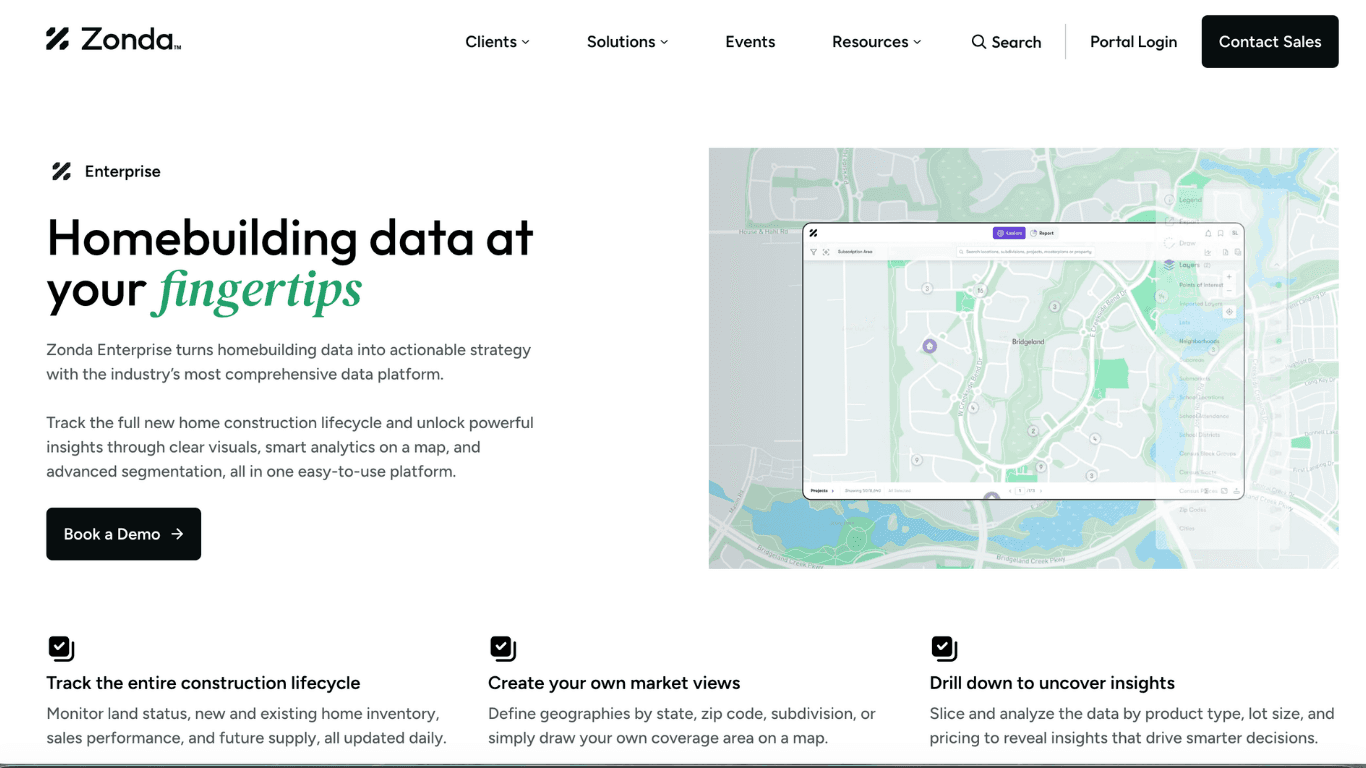
Unified Site Narrative
Audience-Specific Pages
Improved Lead Quality
Cross-Functional Alignment
Lead quality improved. Sharper messaging and audience segmentation replaced generic inbound with product-aligned, intent-driven inquiries reaching the right sales reps. Lead routing was rebuilt so every submission reached the correct rep based on product and intent, reducing friction across a 20-plus rep sales org.
20+ fragmented solutions now sit under a single cohesive system with consistent positioning across every category. The process created lasting internal alignment across marketing, product, sales, and operations with a shared source of truth that extended well beyond the website itself.
The demand generation infrastructure proved its value immediately. An early product campaign generated 32 enterprise leads at approximately $51 CPL with a 16% conversion rate on Google, a direct signal that the site is now built to support and amplify growth at scale.